UV print registration / BUYER GUIDE
How to Reduce Print Registration Errors in Batch UV Production
A practical B2B guide to reducing registration errors in batch uv production, including factory testing, sample approval, batch controls, and shipment preparation.
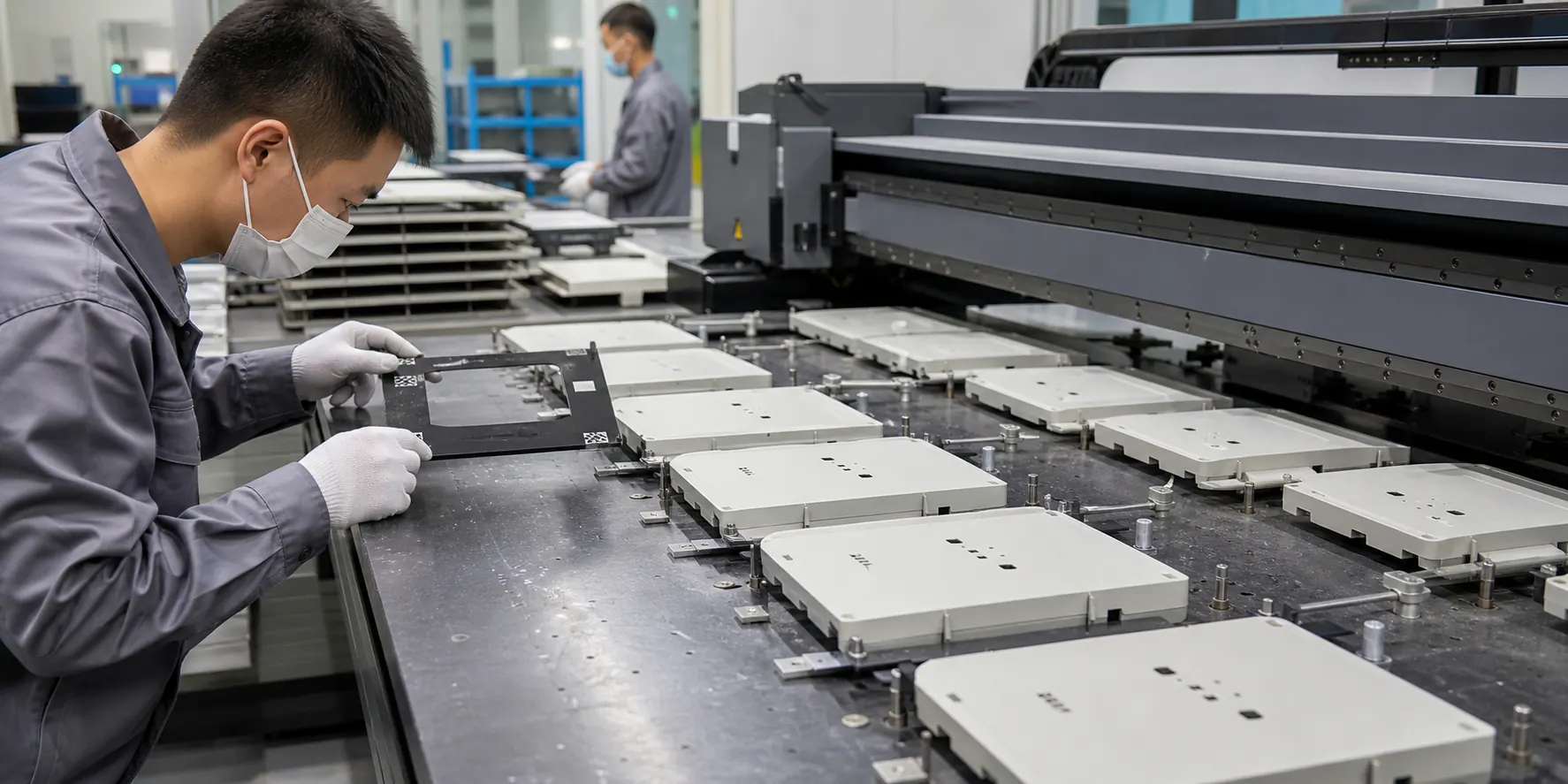
What buyers should decide first
The first decision is how to establish a repeatable part and artwork reference. Ask for a physical production-equivalent blank or an accurate drawing, then mark openings, raised edges, flexible zones, and any surface that will be handled or packed face-to-face. This converts a broad enquiry into an inspectable production brief.
| Buyer input | Why it matters | Factory check |
|---|---|---|
| Actual blank | Confirms material, coating, and flatness | Measure the print area and head clearance |
| Final artwork | Controls content and boundary | Check registration and keep-out zones |
| Handling brief | Defines practical risk | Plan sample and pack-out review |
| Quantity and timing | Shapes fixture and inspection planning | Confirm repeatable batch workflow |
Factory validation before batch release
A first-off sample should use the intended component, artwork revision, white or varnish layers where needed, and fixture reference. Review it for position, colour, edge cleanliness, surface appearance, and the agreed handling condition. The approved sample then becomes the reference for in-process checks and shipment inspection.
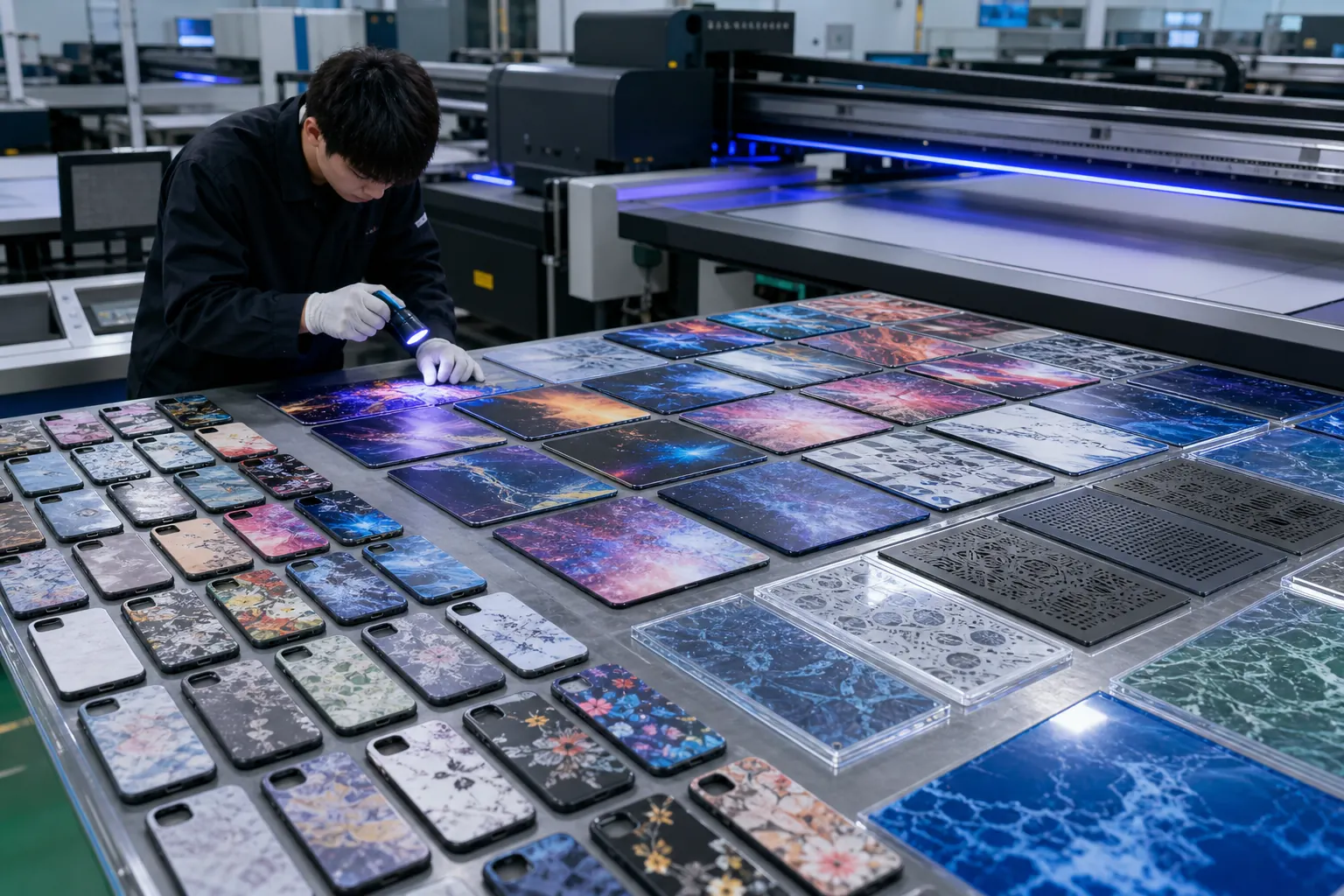
Production checklist
- Use stable locators
- Check first-off alignment
- Inspect representative batch pieces
Common questions
Can this be confirmed from a product photo?
A photo supports an initial discussion, but a final production decision needs a physical blank or a verified drawing, because coatings, local curves, openings, and tolerance can change the result.
Is an approved sample necessary?
Yes. It aligns the buyer and factory on the finished appearance, print boundary, fixture reference, and inspection standard before a larger batch is produced.
Can the same process be used for every plastic part?
No. Material, coating, artwork, finish, geometry, and handling all affect the validation plan. Similar products should be reviewed when those conditions change.
Technical resources and next steps
Continue with our UV printable materials guide, supplier qualification checklist, and plastic-part QC checklist.
For independent technical background, review Epson's UV flatbed overview, Roland's smartphone-case handling guidance, and Mimaki's adhesion guidance. Validate every production decision on the actual blank and approved sample.
Continue your evaluation