UV printing on plastic / BUYER GUIDE
UV Printing on ABS, PC, Acrylic and PVC: A Practical Compatibility Guide for Product Buyers
A practical B2B guide to evaluating UV printing on ABS, polycarbonate, acrylic, and PVC using real blanks, samples, and handling requirements.
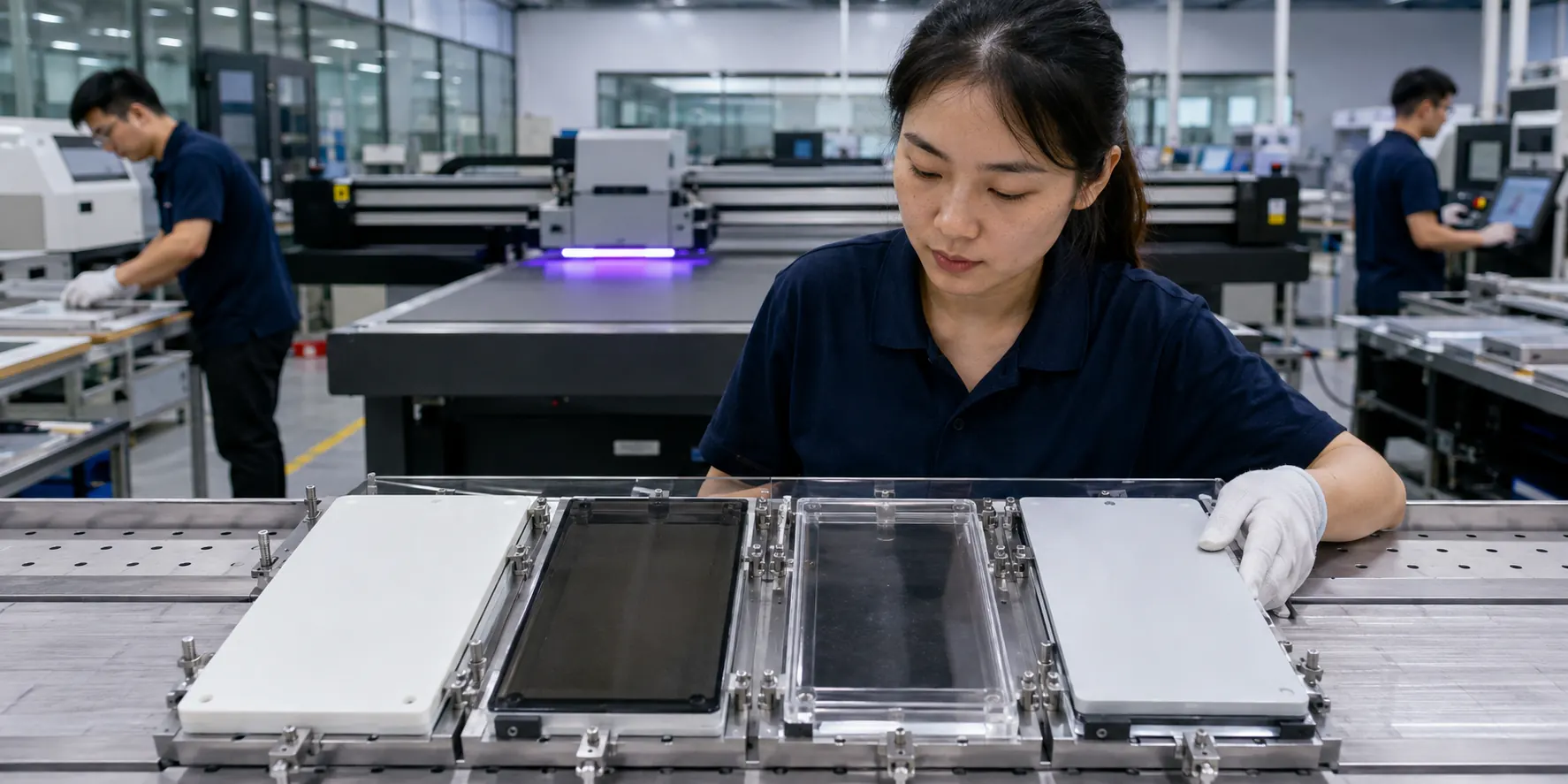
Why “plastic” is not a sufficient specification
A sourcing brief often says “print on plastic.” That description is too broad for a reliable quote or sample plan. Two ABS parts can have different pigments, texture, surface energy, recycled content, mould-release residue, or clear coat. A polycarbonate panel may include a hard coat. Acrylic may be cast or extruded and can be transparent, frosted, or coloured. PVC board can vary by surface treatment and density.
The purpose of a factory material review is not to promise that one ink recipe fits all versions. It is to identify the practical controls: cleaning, primer or surface treatment where appropriate, fixture support, print coverage, cure, and an inspection standard.
| Material | Typical flat-product uses | Main review points |
|---|---|---|
| ABS | Device housings, phone cases, accessory shells | Mould-release residue, texture, pigment, flexing edges |
| PC | Durable covers, equipment panels, clear protective parts | Coatings, transparency, scratch requirement, stress points |
| Acrylic | Display boards, faceplates, retail components | Cast/extruded grade, clear-edge appearance, protective film |
| PVC | Rigid boards, signs, presentation panels | Surface finish, board flatness, contact and packing conditions |
Prepare the actual production surface
Surface preparation begins with clean handling. Dust, oil, fingerprints, protective-film residue, and mould-release agents can interrupt print appearance or adhesion. A controlled cleaning method should be agreed for the real blank. If the initial sample shows weak adhesion, a factory may evaluate compatible surface treatment or primer rather than continuing with assumptions.
Preparation must stay linked to production reality. If a hand-cleaned prototype performs well but the planned batch arrives with a different coating or packing method, repeat the review. The approved sample should identify the blank version and the key preparation direction so that the inspection team knows what it is comparing.
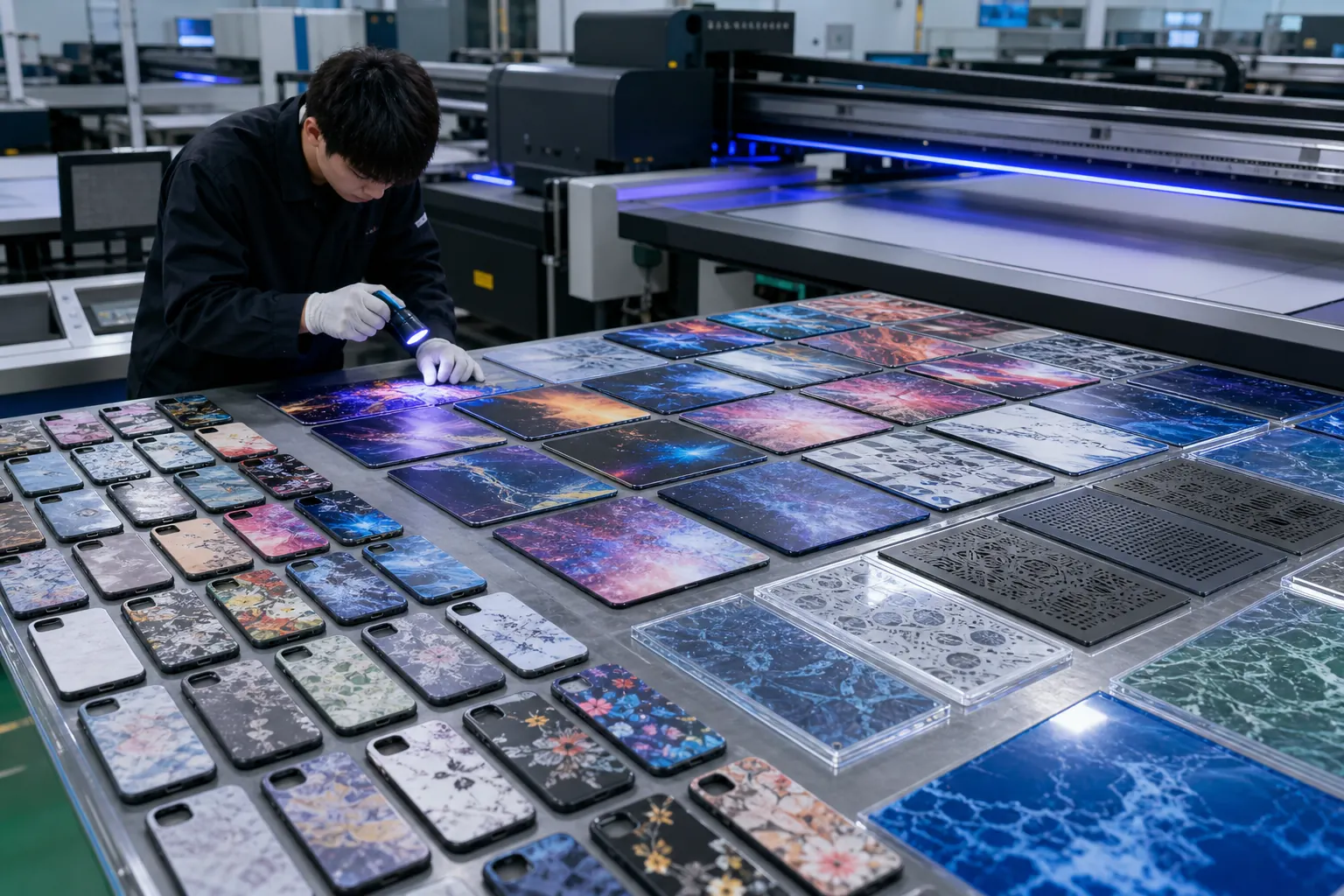
Choose the finish with the end use in mind
White ink can provide opacity on clear, dark, or saturated plastics. Varnish can add a gloss, matte effect, or selected visual contrast. These options are useful only when they support the product brief. A broad glossy layer may make a premium acrylic panel look different under retail lighting; a textured layer can affect stacking and packing. Define the viewing condition and acceptable appearance before asking for a special finish.
For flat panels, a sample should be viewed under representative light and from the expected distance. Inspect solid areas, fine detail, white coverage, edge definition, and any sensitive cut-outs. If the part will be handled frequently, include a simple, agreed handling review rather than relying on a visual check alone.
Build a test brief a supplier can use
- Identify the exact material grade, colour, coating, and blank supplier where available.
- Supply physical blanks from the intended lot, not only photos or generic material names.
- Mark the flat printable area, keep-out zones, and any area exposed to abrasion or assembly.
- State the desired colour, white, varnish, and surface appearance.
- Define how the finished product is handled, cleaned, packed, and inspected.
- Approve a reference sample before repeat production or shipment inspection.
FAQ
Is acrylic easier to print than ABS?
Neither material is universally easier. Acrylic often offers a clear, flat presentation surface, while ABS is common in molded housings. Coating, cleanliness, texture, artwork coverage, and handling conditions still need sample validation.
Does primer always solve adhesion issues?
No. Primer or treatment can be part of a solution, but it must be compatible with the component, ink, finish, and production process. It should be tested and recorded rather than applied as a generic fix.
Can one approved sample cover all colour variants?
Not always. A clear, black, white, and highly textured version of the same component can behave and look differently. Review variants that materially change opacity, coating, or handling.
Technical resources and next steps
Continue with our UV printable materials guide, supplier qualification checklist, and plastic-part QC checklist.
For independent technical background, review Epson's UV flatbed overview, Roland's smartphone-case handling guidance, and Mimaki's adhesion guidance. Validate every production decision on the actual blank and approved sample.
Continue your evaluation