UV printing MOQ factory / BUYER GUIDE
UV Printing MOQ for Mixed-SKU Plastic Orders: How to Plan a Practical Pilot
UV Printing MOQ for Mixed-SKU Plastic Orders. Practical OEM sample, fixture, inspection and export checks for flat plastic parts.
Introduction
UV printing MOQ factory should be qualified on the real production component, rather than from a material label, a digital rendering or a generic coupon. For mixed-SKU flat plastic housings, accessory shells and rigid panels, PaintNex begins with the final blank, a marked printable zone, the released artwork, handling expectations and the buyer's written acceptance criteria. This guide explains how a procurement team can convert those inputs into a defensible sample and an inspectable batch plan.
Direct answer for buyers
The practical question is whether mistaking order quantity for a universal minimum without accounting for fixtures, artwork changes and approvals can be assessed on the actual component before production. A dependable answer comes from a product-specific trial: use the intended blank, its final surface, the correct artwork revision, a repeatable orientation and the agreed handling or packing conditions. It does not come from a blanket statement that one material name is always compatible.
The decision that makes this project different
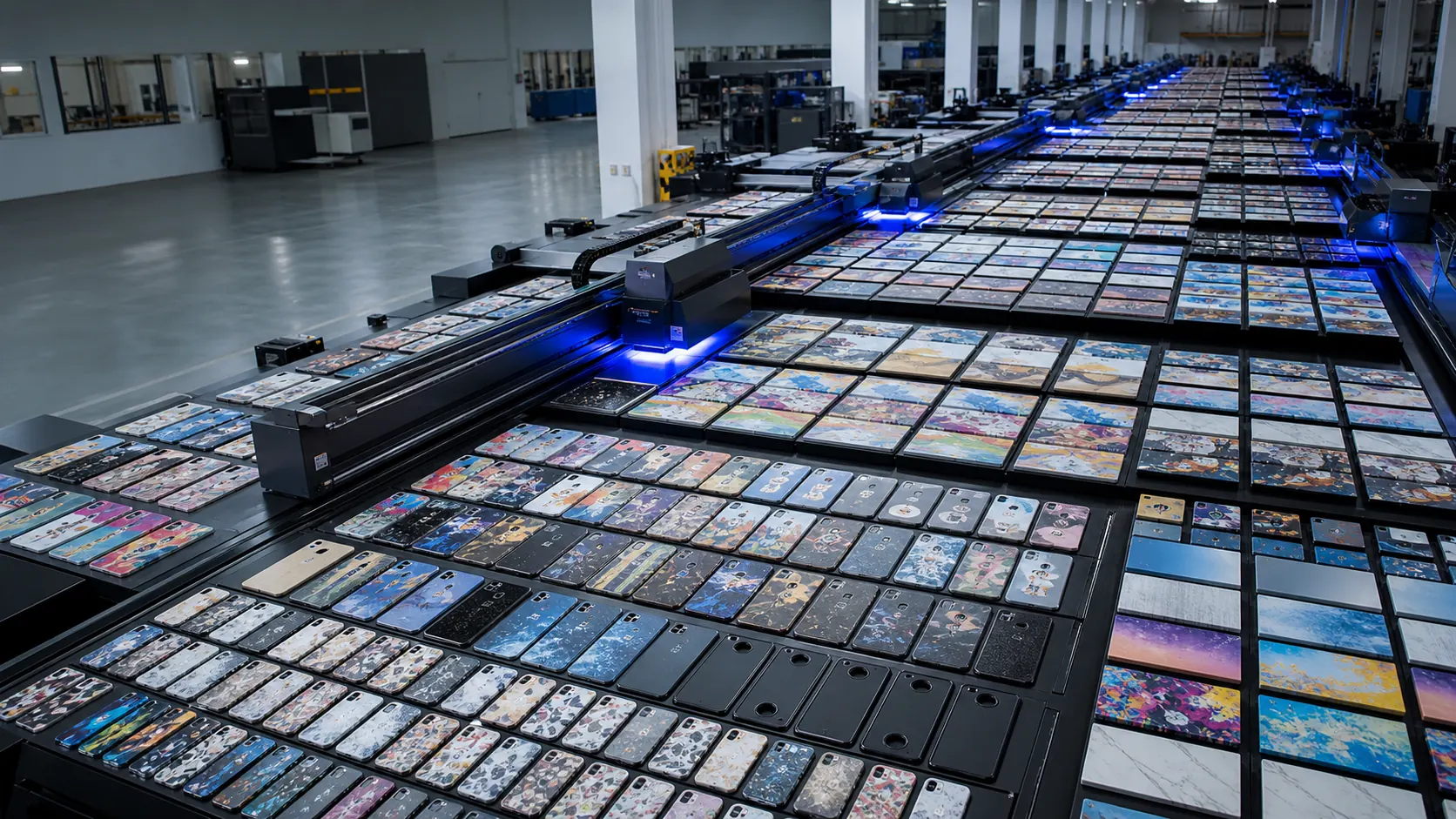
An OEM may want a small pilot across eight colours, four artwork languages and several mould revisions. The total piece count can be misleading because each combination may require a separate first-off and setup. Conversely, a single stable phone-case SKU can be easier to run in a larger batch even when the nominal MOQ is the same. The right conversation is about cavities, setup cycles, blank yield, proof approvals and packing variations, not a blanket minimum printed on a website.
Production-equivalent comparison
Map a SKU matrix with part version, finish, artwork, quantity and fixture compatibility. Request a pilot that includes enough representative blanks to examine orientation and cosmetic variation, then identify which observations support the planned production lot. Record whether customer-supplied blanks include allowance for setup and inspection. A pilot quantity should answer a defined question; it does not guarantee later mass-production yield. The Roland mass-customization workflow is a process or standards reference, not proof of suitability for an untested PaintNex order.
What the purchase order should settle
Ask the supplier for a quantity break by stable SKU and an explanation of setup assumptions. A lower nominal MOQ may still be expensive if every artwork version triggers a full changeover. Combine compatible SKUs only when the approval and traceability plan remains clear.
- Build a SKU and artwork matrix
- Separate setup from run quantity
- Plan blank allowance for trials
Commercial terms need an engineering baseline
A purchasing discussion is most productive after the supplier has seen the final component or a controlled drawing. Quote line items should distinguish physical blanks, prepress, sample preparation, fixture engineering, repeat production, inspection, rejection allowance, protective packing and logistics. Some charges occur once; others recur with every colour or artwork variant. A buyer who compares only a unit-printing line may select a quotation that does not cover the work needed for a released part.
Use an assumptions register in the RFQ and purchase order. It can state who approves the artwork, who checks material changes, what constitutes the production start, how many variants are active, which physical sample is authoritative, and whether the buyer or supplier owns scrap from incoming blanks. This register is not legal boilerplate; it converts unknowns into decisions that can be closed before a schedule or price is treated as firm.
At the pilot stage, keep the scope small enough to investigate but large enough to reveal fixture loading, first-off review, version changes and carton packing. Once the pilot is accepted, preserve its component and artwork revisions. If the order mix changes substantially, ask whether a new setup or inspection plan is needed rather than applying the old unit rate automatically. A reliable supplier should be able to explain the drivers of a revised quotation without inventing a universal MOQ, lead time or throughput figure.
Pilot design matters more than a headline minimum
A small order can contain many setup events. Consider a 200-piece pilot split across five shell models and four graphic files: the total number alone does not show whether each model-file combination receives enough blanks for a meaningful first-off. Conversely, a 200-piece single-SKU pilot may be a straightforward fixture and appearance trial. These are illustrative arithmetic examples, not PaintNex minimums or production promises. The buyer should decide which combinations need physical approval and whether the pilot tests colour, adhesion, alignment, packing or all four.
When evaluating MOQ, separate commercial and technical questions. The supplier may charge a setup fee or minimum run value because of preparation time. The buyer may need extra blank pieces for cleaning trials, fixture tuning and inspection. These are different numbers. Ask what happens to trial parts, whether they can be shipped as saleable units and how deviations are documented. A minimum without a defined accepted output can mislead both parties.
For replenishment, group SKUs only where the same part, fixture and inspection rule truly apply. Put language variants in the batch matrix and request a changeover check. Low-volume digital printing can be attractive when many variants share a repeatable physical platform, but artwork control can become the dominant risk. A transparent quantity break by stable SKU gives procurement a clearer choice than a single advertised MOQ.
Why the actual moulded part matters
Plastic parts do not behave as rigid metal coupons. Dimensions, form and local position can move with resin behaviour, shrinkage, tooling, cooling and geometry. ISO 20457:2026 describes a plastics-specific approach to moulded-part tolerances and acceptance conditions. For decoration, this means the fixture and artwork safe area should follow the production part, not an assumed nominal outline.
Inputs to send before feasibility review
| Buyer input | Why it changes the review | Factory output |
|---|---|---|
| Production-equivalent blank | Reveals the true surface, texture and local geometry | Usable print area and fixture reference |
| Released artwork | Controls language, colours, white layers and clear zones | Revision-controlled proof and layer plan |
| Assembly and handling brief | Identifies openings, contact areas and exclusions | Sample test and inspection points |
| Quantity and delivery plan | Shapes tooling, in-process checks and packing | Practical batch and shipment plan |
Factory testing and sample approval
Factory testing should reproduce the variables that matter: the intended blank, final finish, printable orientation, artwork revision, fixture location, white or varnish layers where required, and representative handling. Review placement, edge quality, visible finish, clear zones and packing contact on the physical part. Retain the accepted first-off with a short record of the part version, artwork revision and orientation.
When an adhesion comparison is relevant, agree the exact substrate, surface condition, sample preparation, tape, method and pass/fail rule before testing. ASTM D3359 notes that substrate and surface preparation materially affect coating adhesion, and it identifies limitations of tape methods. Treat the result as a controlled comparison for the specified system, not a universal service-life claim.

Product-specific decisions before artwork release
Separate functional and cosmetic zones
Start by mapping the front face into zones. A cosmetic zone is where a buyer expects a controlled appearance; a functional zone may include a window, sensor, touch area, connector, fastener, latch, light path or assembly datum. The two can overlap visually, so the drawing should make the decision explicit. A printed graphic must never be used as a substitute for an engineering clearance or product-function review.
For mixed-SKU flat plastic housings, accessory shells and rigid panels, the most useful artwork file is accompanied by a simple placement drawing. It identifies the printable zone, a conservative safe area, the part orientation, exclusions and any reference edges used for inspection. That information lets the factory build the fixture and lets an overseas buyer assess the first-off from the same evidence.
Make colour approval traceable
Colour requests are often expressed as a brand reference, a screen image or an informal comment. None of these is enough by itself for batch control. If a specific reference is important, provide the source file, intended substrate, white-base expectation and viewing condition. Keep a signed or otherwise recorded visual approval on the actual component rather than trying to reconstruct it from an email screenshot.
The same discipline applies to matte, gloss, texture and opacity. One component may make a colour look different from another, even where the artwork data is identical. The buyer should decide whether the priority is a visual match, a graphic hierarchy or an agreed production range, then state that priority before the first sample is reviewed.
Plan for change control early
A tool revision, resin supplier change, coating update, changed moulder, different artwork language or altered packaging can all invalidate assumptions in a prior approval. Change control does not have to be bureaucratic: identify the changes that touch the printable face or handling path, compare a new first-off with the retained reference and record the disposition before bulk production resumes.
This is especially important when the buyer expects a family of parts to share one visual identity. Similar housings can have different local geometry, window positions and textures. Approving one size or colour does not automatically approve every member of the family. A short matrix of part number, artwork, finish and approval status is more reliable than a verbal "same as before" instruction.
A practical buyer checklist before purchase order release
- Confirm the component version and quantity match the approved sample request.
- Release the exact artwork file, language variant and source of all required icons or information.
- Mark printable areas, clear zones, contact surfaces and functional exclusions.
- Agree the first-off reference, visible inspection condition and any specifically requested comparison test.
- Confirm fixture orientation, in-process check points, packing protection and shipment-inspection timing.
- Establish how revisions and deviations will be communicated before an order moves to batch production.
This checklist does not transfer product design, legal, regulatory or end-use responsibility to the decoration supplier. It gives procurement a more complete record of the information that a factory needs to execute the requested visual work. The more faithfully the approval part matches the shipped part, the more useful the retained sample becomes when the batch is reviewed.
Mid-article CTA: Request a Product Review
Email info@paintnex.com with photos of the physical blank or an approved drawing, the resin and finished-surface information, marked print area, released artwork, quantity, expected handling and packing requirements. We can prepare a product-specific sampling, fixture and inspection brief. Start with our UV-printable materials buyer guide and artwork and fixtures guide if the project inputs are still being assembled.
From approved sample to repeatable batch
1. Freeze the part and artwork version
Record the component revision, surface finish, artwork file and print orientation. When any one changes, compare the new condition with the retained approved first-off before relying on a previous approval.
2. Validate the fixture on representative blanks
Check more than one blank in the intended fixture. A part can sit differently because of local form, gates, tooling variation or assembly features. A fixture supports repeatable placement; it does not erase the need to identify variation that affects the cosmetic zone.
3. Inspect where the buyer will look
Agree the visible face, inspection lighting, viewing distance and defects that matter. Inspect representative pieces for artwork version, position, edge quality, colour appearance, unwanted marks and excluded functional zones. Use a documented quality-control checklist, not a last-minute visual impression.
4. Include pack-out in shipment inspection
The decorated face can be acceptable at the press and still be damaged by stacking, dividers, bags or carton movement. During shipment inspection, review product protection, carton arrangement and representative finished pieces together. Our export packing guide explains the questions worth closing before release.
Common procurement mistakes
| Shortcut | Why it causes risk | Better control |
|---|---|---|
| Approving a coupon only | It hides real geometry and surface variation | Approve the production-equivalent component |
| Sending artwork without keep-outs | It can place graphics over windows or contact zones | Mark printable and excluded regions |
| Treating a material name as a pass result | Coatings and moulding conditions vary | Test the exact part version |
| Inspecting only before packing | Contact damage can occur after decoration | Run a packing trial and shipment inspection |
FAQ
What is the standard MOQ for UV-printed plastic parts?
There is no defensible universal number. It depends on part geometry, fixture, artwork variants, blank supply, testing and packing scope.
Can this type of part be approved from a rendering alone?
No. A rendering confirms design intent but cannot demonstrate real surface texture, fixture fit, local flatness, visible finish or packing contact. Use it to align artwork, then approve a physical production-equivalent sample.
Does a successful first-off apply to every batch?
It applies only while the approved component, surface, artwork, fixture and agreed handling conditions remain controlled. A revised resin, coating, tool, artwork or packing arrangement should trigger a comparison with the retained sample.
What should an importer verify before shipment?
Check the part version, artwork revision, print placement, visible appearance, functional keep-out zones, face protection and carton configuration against the approved reference. Record any agreed sampling method before inspection starts.
For an adjacent buyer question, review our related PaintNex guide before releasing the final supplier brief.
Conclusion
UV printing MOQ factory becomes a manageable B2B sourcing project when the buyer and factory work from the actual part, a released artwork file, a retained first-off and a concise inspection plan. That process creates evidence for the project at hand and avoids overpromising based on a generic material label.
Technical resources and next steps
Continue with our UV printable materials guide, supplier qualification checklist, and plastic-part QC checklist.
For independent technical background, review Epson's UV flatbed overview, Roland's smartphone-case handling guidance, and Mimaki's adhesion guidance. Validate every production decision on the actual blank and approved sample.