UV printing fixture maintenance / BUYER GUIDE
UV-Printing Fixtures for Repeat Orders: Ownership, Maintenance and Replacement
Define ownership, storage, condition checks and replacement of UV-printing fixtures so repeat OEM orders retain the approved locating standard.
Introduction
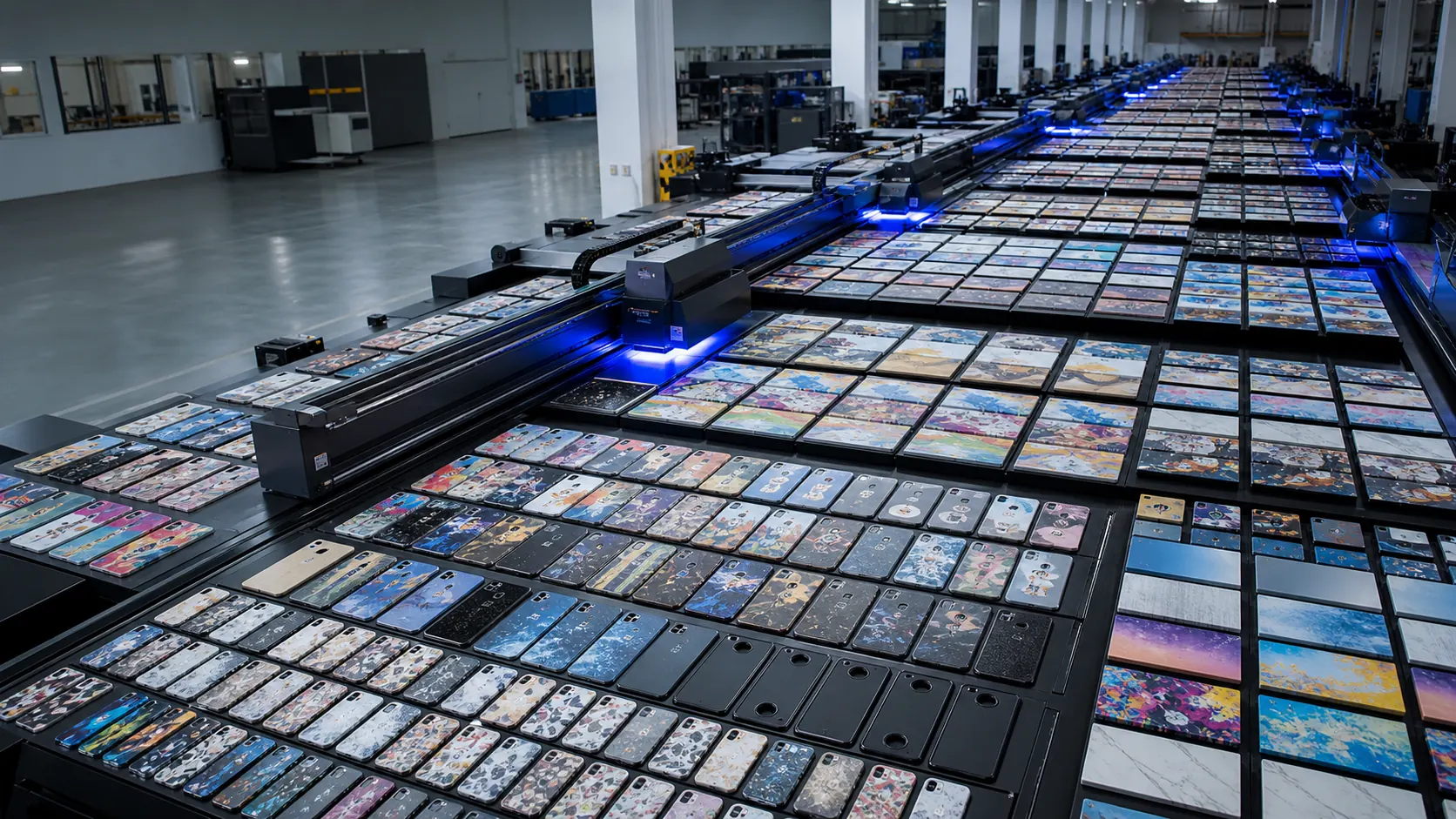
A fixture approved during a pilot can become an invisible assumption in every later quotation. The buyer may believe it owns a durable production tool, while the supplier treats it as temporary setup equipment. Wear, storage and a changed mould can then undermine repeatability. This guide covers the commercial and technical lifecycle of locating nests for flat plastic parts, complementing initial jig-design advice with the controls needed for replenishment orders.
Direct answer for buyers
Agree fixture ownership, identification, permitted use, storage, maintenance responsibility and replacement terms. Preserve its locating design and the first-off reference it supports. Inspect condition and fit at relevant setup or change events, and verify any repair before release. Ownership alone does not establish repeatability; the fixture must still locate the current production blank in a way that supports the agreed print-placement and cosmetic standard.
Describe what the buyer is purchasing
A quotation may include design effort, a physical nest, setup labour or several of these. Ask the supplier to identify the scope and who owns the resulting item and documentation. Clarify whether the tool is dedicated to one customer, shared across compatible parts or replaced as part of the supplier's process. Avoid assuming that paying a setup charge automatically transfers all design rights or physical custody.
Record part and fixture identity, revision, compatible variants and the intended locating references. If the fixture is delivered to another site, identify what information travels with it and who checks its condition on receipt. Contractual ownership and technical suitability are separate questions. A buyer-owned tool can still be unsuitable for a changed moulded component, and a supplier-owned nest can still support a well-controlled order when its responsibilities are clear.
Define condition checks that relate to the print requirement
Inspect the locating and support features that affect placement, orientation and contact. Dirt or damage on one nest can change how a part sits without changing the file. A worn restraint may allow rotation; a support edge may mark the underside or distort a thin frame. The inspection should follow the fixture's function rather than an arbitrary cosmetic standard for the tool itself.
Check representative blanks in each relevant cavity. Use a retained reference or a controlled gauge where appropriate, and compare the first printed pieces with the agreed placement method. A fixture can look clean while a new mould lot no longer fits as expected. Record the observation and disposition before bulk loading. Do not compensate silently in artwork for a damaged tool, because that can create another error when the fixture is later repaired.
Control maintenance, repair and replacement
Specify who may alter the tool and what verification follows. Replacing a locating pin, resurfacing a nest or changing a support material can affect the datum relationship. A repair should not inherit approval solely because the physical tool retains the same label. Record the changed feature and the evidence needed to release it.
There is no universal service life for a UV-printing fixture. Usage, material, geometry, cleaning, handling and storage influence its condition. Ask for a condition-based maintenance approach and replacement planning appropriate to the order. Keep a route for responding to an unexpected tool failure without selecting an unverified substitute. If duplicate fixtures are needed for supply continuity, qualify their output against the same physical approval standard rather than assuming copies are identical.
Preserve tooling readiness between repeat orders
Agree where the tool is stored, how it is protected and what happens after a long idle period. A fixture retrieved for replenishment should be checked against the current part and artwork revision. The old production record may refer to a discontinued blank or a different protective finish. Use the next first-off to confirm the current setup instead of relying on a successful run from months earlier.
Commercially, define charges and notice for replacement, custody transfer and retirement. Identify whether the supplier retains a sample after a tool is withdrawn and how obsolete tools are kept out of active use. The buyer should know which fixture supports each SKU family. This helps procurement plan repeat orders without forcing the factory to reveal proprietary machine settings or promising unlimited tool life.
Keep the finished blank under control
A resin abbreviation is useful but incomplete. Record the component number, mould or sheet source, colour, texture, coating, protective-film status and the lot presented for testing. The visible face is the actual print interface. A sample made on a smooth uncoated plaque may not represent the textured or coated housing that purchasing will receive. Ask for production-equivalent blanks and identify which differences from final production are still open.
Review several blanks in the proposed fixture. Local flatness, ribs, gates, clips and warpage can change how a component sits, even when its nominal outline is unchanged. Mark the locating reference and the face that will be visible after assembly. A fixture can make placement repeatable only within the variation that its design accommodates; it does not turn a variable moulded part into a perfectly rigid plate.
Keep an unprinted reference from the evaluated lot when a later compatibility comparison may be needed. Store it so its surface is not contaminated by handling or unsuitable packaging. If the material source, coating, texture or preparation changes, identify which part of the approval is affected before assuming that the previous result carries forward. The resulting record should let an overseas buyer connect a sample decision to the finished component supplied in a later shipment.
This is a request for traceable inputs, not for proprietary chemical recipes. A supplier can protect its process knowledge while identifying the controlled preparation route and notifying the buyer when that route changes. The important commercial point is that the shipped surface remains within the condition that was actually approved.
Mid-article CTA: Send Your Requirements
Email info@paintnex.com with your part drawing or photos, final-surface details, quantity and the decision you need to make about UV printing fixture maintenance. Ask for a product-specific sample and inspection brief. For the related baseline, review the fixture-accuracy guide.
Illustrative sourcing scenario
In an illustrative replenishment project, a buyer orders the same flat phone shell after a mould revision. The old nest still accepts the part, but its locating contact now sits near a changed feature. The factory compares several blanks and the first-off before releasing the order.
The team decides whether the nest needs a controlled modification or replacement, then records the verified configuration and compatible part revision. The ownership agreement determines who pays and who holds the tool, but it does not decide the technical result. No actual tooling performance is claimed. The example shows why repeat-order readiness combines part identity, tool condition and first-off evidence.

Buyer release worksheet
Use these questions in the RFQ, pilot review or shipment-release discussion. Ask the supplier to respond with the evidence available for the actual component and to identify any unresolved item. The hold conditions are prompts for an authorised decision, not automatic test thresholds. Your product and quality owners should set the applicable acceptance rule before the trial or order is released.
| Release question | Evidence to request | Hold or escalation condition |
|---|---|---|
| What tooling rights and custody are agreed? | Request a distinction between design, physical nest and setup services. Record ownership, permitted use, compatible parts and what information accompanies a transfer to another site. | Hold a custody assumption based only on payment of an undefined setup fee. |
| Is the current nest fit for the current blank? | Review locating and support condition in relevant cavities using representative parts. Link any first-off placement result to the tool revision and identify damage or contamination that affects location. | Escalate silent artwork compensation for a damaged or mismatched fixture. |
| How is repair or replacement released? | Ask who may alter the tool and what verifies the changed locating relationship. Define storage, restart checks and condition-based replacement responsibility for future orders. | Do not inherit the old approval merely because the repaired tool carries the same identity. |
Assign an owner and a next action to each open row. Keep the response with the relevant part and artwork release so the same question does not return as an undocumented assumption on the next order. A supplier can report that more evidence is needed without claiming a failure or a pass. Close the row only when the accountable buyer has enough information for the intended decision, and preserve the scope of that decision when quantities, materials or handling conditions later change.
Maintain one approval trail through the order
Connect the part revision, artwork revision, surface condition, fixture reference and physical approval sample in one release record. The document should say what is approved, by whom and for which order or product configuration. If a newer file replaces an older one, make the change visible to prepress, production, quality and packing. A filename such as final-final does not establish an approval state.
Keep trial, accepted, rejected and retained pieces distinguishable. For a mixed batch, record quantities by the combinations that actually ship, rather than only a grand total. A correct quantity of printed parts can still contain the wrong language, model or revision. Carton and tray identity should make a later investigation possible without depending on an operator's memory.
At shipment inspection, compare representative finished and packed units with the same released standard used during setup. Record any sorting, rework or concession, including the affected scope and authorised disposition. If pieces were replaced after inspection, decide what additional check is required before those replacements join the released shipment. The report should describe the delivered state, not a state that existed before the final intervention.
Preserve the information needed for the next order: approved reference, material declaration, released artwork, inspection criteria and packing arrangement. Storage duration and access permissions can follow the buyer's requirements. This approval trail supports repeat purchasing, but it should not be described as a certification, an audit result or proof of product compliance unless that separate evidence actually exists.
Make the buyer-to-factory handoff usable
Supply one controlled package containing a part drawing or clear photographs, material and finished-surface information, printable boundaries, released artwork, quantity by variant, intended product use and destination. Mark open questions explicitly. The factory can make a better feasibility response when it knows which features are fixed engineering constraints and which cosmetic choices can still change.
Assign an owner for technical text, translations, symbols and data. PaintNex should receive the buyer's approved content rather than infer the meaning of an icon or invent a performance statement. Keep a visual proof separate from the physical sample approval: the proof controls information and design intent, while the real component reveals surface, alignment and handling behaviour.
During the pilot, ask the supplier to report exceptions in a form that purchasing and engineering can both use. An exception should identify the location, observed condition, proposed action and decision required. Replace vague comments such as improve quality with a specific question about a boundary, reference or test. This reduces the chance that two teams solve different interpretations of the same brief.
Before production, close the active questions and identify the approved configuration. The purchase order should cite the right part and artwork versions, inspection basis and packing state. When a requirement changes later, send the change through the same release path. A clear handoff does not eliminate every manufacturing variation, but it makes the next decision traceable and prevents an informal message from silently becoming a new production standard.
Put the approval boundary into purchasing terms
A technically promising sample becomes easier to buy when the quotation and purchase order describe the same scope. Identify who supplies blanks, who owns the fixture, which artwork variants are included, what testing is requested, what quantities are saleable and what packing condition is delivered. Separate a development estimate from a released production commitment where important assumptions remain open.
Agree how deviations are communicated and who can authorise a disposition. The choice to rework, replace, accept under a limited concession or reject should be tied to the affected parts and requirement. A supplier's proposal is not the buyer's approval. Avoid allowing a rush shipment or an informal message to expand the accepted standard for all future orders.
State the events that reopen review: a changed blank supplier, coating, mould, artwork, fixture, assembly step or protective material can affect the approved result. Not every event needs an entire qualification repeated, but the responsible parties should decide what targeted evidence is required. Preserve the decision with the order so a replenishment team can understand it later.
Commercial comparisons should include setup, sample preparation, tooling, inspection, rejected material, protection and logistics where those items are in scope. Do not infer a universal price, minimum order, lead time or production capacity from an article. Send the actual customer requirements for a project-specific response. This turns the buying conversation into a bounded plan that the factory can quote and the customer can inspect.
Technical references for the evaluation
NIST dimensional measurement uncertainty. Use a documented measurement method when discussing placement data and its limits.
Roland material and shape guidance. Consult the equipment maker's material guidance when preparing the feasibility trial.
FAQ
Does a setup fee mean I own the fixture?
Not necessarily. The quotation and agreement should distinguish design, physical tooling and setup services. Resolve ownership and custody explicitly.
How long should a UV-printing fixture last?
No universal interval applies. Ask for condition checks and a maintenance or replacement basis related to the actual tool, usage and component.
Can a repaired fixture use the old approval?
Review the repair's effect on locating and support. Verify the changed tool against the current part and accepted print standard before extending approval.
Should a duplicate nest be qualified?
Yes when it is used to produce accepted parts. Compare its relevant output and locating behaviour against the same reference rather than assuming duplication proves equivalence.
Conclusion
Make fixture lifecycle part of the repeat-order plan. Clear ownership, condition checks and controlled changes preserve a useful relationship between the tool, current blank and approved graphic. That supports replenishment more credibly than an undefined promise of permanent tooling readiness.
Technical resources and next steps
Continue with our UV printable materials guide, supplier qualification checklist, and plastic-part QC checklist.
For independent technical background, review Epson's UV flatbed overview, Roland's smartphone-case handling guidance, and Mimaki's adhesion guidance. Validate every production decision on the actual blank and approved sample.